Since Valentine’s Day is upon us, I figured this was the perfect time to talk about how I’m making player choice affect the character’s relationships with each other! If you need a refresher on who the characters are, please see my last post.
Why do character relationships matter?
One of my favorite parts of a game is seeing how characters grow and bond with each other. Whether it be romantic, platonic, familial or something else, character relationships are important and impactful. So I’ve been working on ways to implement this into my game!
It’ll be important to have a positive relationship with the rest of the party. If the player harms their relationships with the party, they’ll act differently. They might not trust the player, which could make the game harder.
On the flip side, a positive relationship could open new doors for the player. The party would trust them, and there would be less conflict overall in the group.
OK, but how are you going to do that?
It was interesting to try to tackle the nitty-gritty details of how exactly I was going to do this. How could I allow players to build relationships with the rest of the party? Or allow players to destroy relationships? The main way I decided to do this is with variables.
It’s a fairly simple thing to create and alter variables in RPG Maker MV. Now, you might be wondering what a variable is. A variable is a value that can be changed throughout the game. Still confusing? Here’s an example to help.
One of the variables in the game is labeled “Lin’s Affection.” This variable has a value that starts at 0. Player choices can raise or lower this value. For example, the player can be rude to a child NPC. This lowers the variable “Lin’s Affection” by 5. This would make Lin’s Affection -5.
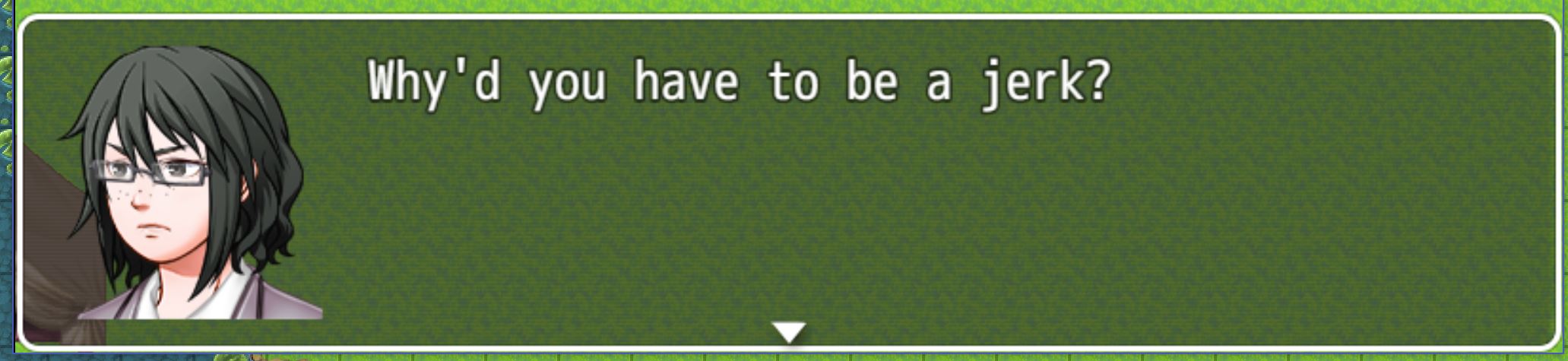
Now that I have this variable, I can use conditional branches to create different options. For example, in a cutscene, I can have Lin act differently based on her affection level.
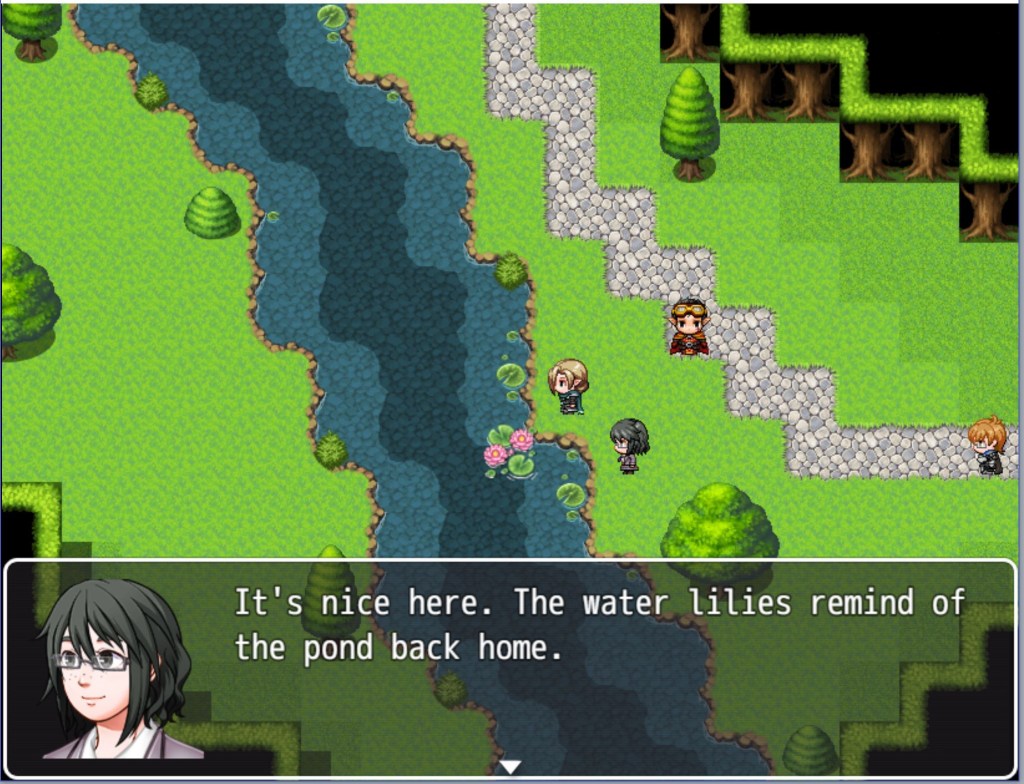
This screenshot is from a cutscene. In the cutscene, the group isn’t sure if these woods are safe. Ann walks to the river, looks around and says its fine. If the variable “Lin’s Affection” is positive, Lin walks over to the river and stands near Ann. The two reminisce about their home.
Now let’s see a screenshot from the same cutscene if the variable “Lin’s Affection” is negative.
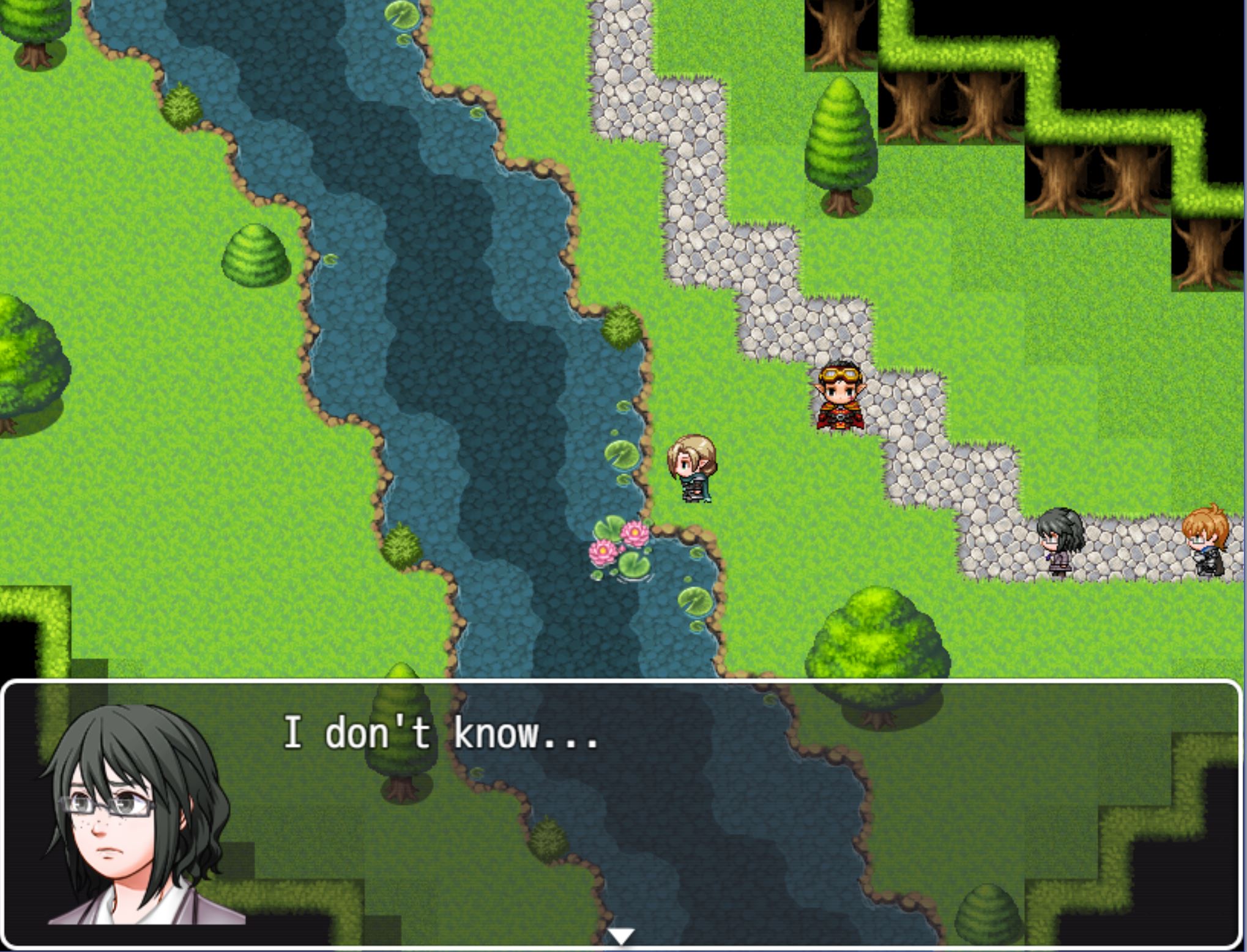
This time Lin doesn’t go to the river when Ann says it’s all clear. Because of how the player has acted, she doesn’t trust Ann as much. Because of the player’s actions, they miss out on a touching moment between the two sisters.
Is that the only way you’re going to do this?
No, but this will be the main way. I will also likely have switches (similar to variables, but they have two options, on or off) based on the player’s actions. For example, a switch based on whether the player returns a book to Harvey.
What’s next?
Next week I will likely not be posting a new blog post. If I do, it will be a shorter blog post. But I will be back in two weeks with another proper blog post!
Let me know what you thought about this post in the comments below! Please put any questions you have down there. Finally, what would you like to see in the next big blog post two weeks from now?

 Developing for Fun: My First Game
Super interesting with a lot of new information for me, good job.
LikeLike
I know literally nothing about game design, so this is all new information to me, but it’s so fascinating to learn a little bit about the creative process behind the design. This specific bit of internal design with the characters reminds me of a “choose your own adventure” type scenario.
LikeLike